The SleepSpot Insomnia Studio
The SleepSpot Insomnia Studio
Where adults learn how to quiet the mind, relax the body and fall asleep more easily.
Your mind won’t settle when the room goes
quiet and dark.
quiet and dark.
Your body feels wired, restless and unable to downshift.
You wake through the
night or too early, and struggle to settle again.
night or too early, and struggle to settle again.
Why insomnia isn't just about the night
If you've been struggling with sleep for a while, chances are you've already read the articles, listened to podcasts and tried plenty of advice.
The problem isn't that you don't know enough about sleep. The problem is that insomnia is rarely just about what happens at bedtime.
For many of us, our days are spent in constant 'go mode'. Solving problems. Meeting deadlines. Looking after everyone else. By the time night arrives, our mind hasn't had the chance to slow down.
For others, worries and unfinished thoughts don't disappear during the day. They simply wait until the lights go out, when there's finally space for them to surface.
And sometimes, after weeks or months of poor sleep, our brain begins to associate bedtime with alertness rather than rest.
Why insomnia isn't just about the night
If you've been struggling with sleep for a while, chances are you've already read the articles, listened to podcasts and tried plenty of advice.
The problem isn't that you don't know enough about sleep. The problem is that insomnia is rarely just about what happens at bedtime.
For many of us, our days are spent in constant 'go mode'. Solving problems. Meeting deadlines. Looking after everyone else. By the time night arrives, our mind hasn't had the chance to slow down.
For others, worries and unfinished thoughts don't disappear during the day. They simply wait until the lights go out, when there's finally space for them to surface.
And sometimes, after weeks or months of poor sleep, our brain begins to associate bedtime with alertness rather than rest.
A fresh approach
Cognitive Behavioural Therapy for Insomnia (CBT-I) is the foundation of the way I work. I’ve used it for many years with clients and drawn on it in my own life, and it remains the internationally recommended first-line treatment for insomnia, for good reason. It helps change the behaviours and thinking patterns that keep insomnia going.
But I’ve also seen that when insomnia has become deeply established, CBT-I may be only part of what’s needed.

Frequently Asked Questions about the Insomnia Studio
What kinds of insomnia do you help with?
I work with adults who have difficulty falling asleep, wake during the night and struggle to get back to sleep, wake much earlier than they want to, or simply feel that sleep has become much harder than it should be.
Sometimes there’s a very active mind at night. Sometimes sleep has become something you think about, monitor or worry about far too much. And sometimes you’re exhausted, but your mind and body just don’t seem ready to let go of the day.
Whatever it looks like, the starting point is understanding what is keeping your particular pattern going.
How do I know if my sleep problem is insomnia?
You don’t need to diagnose yourself before coming to see me.
Chronic insomnia generally means difficulty falling asleep, staying asleep or getting the quality of sleep you need, despite having the opportunity to sleep. It typically occurs at least three nights a week for three months or more and affects how you feel or function during the day.
But I also see people before they reach that three-month mark, particularly when sleep is becoming increasingly difficult or they can feel themselves starting to worry about it.
How is chronic insomnia diagnosed?
Chronic insomnia is different from many other sleep disorders. It is generally not diagnosed through an overnight sleep study. Instead, assessment usually involves looking carefully at your sleep history, sleep patterns, health and medications, daytime functioning, behaviours around sleep and the factors that may be keeping the problem going. Sleep diaries and validated questionnaires may also form part of the assessment.
Where symptoms suggest another sleep disorder or medical condition may be contributing, further medical assessment may be recommended.
I've tried everything for my sleep. How would this be different?
I hear this a lot.
By the time people come to see me, they’ve often tried supplements, sleep apps, podcasts, meditation, new pillows, earlier bedtimes and just about every sleep tip Google has to offer.
Usually, the problem isn’t that you need more information about sleep.
We look at what is actually keeping your insomnia going now. That might be sleep timing, learned patterns around bed, an active mind, heightened arousal, sleep effort, worry about not sleeping, or a combination of things.
Treatment is then built around that, rather than giving you another list of things you “should” be doing.
What solutions do you use for insomnia?
CBT-I, or Cognitive Behavioural Therapy for Insomnia, is the evidence-based foundation of my work and the internationally recommended first-line treatment for chronic insomnia.
But I don’t treat CBT-I as a rigid recipe.
Depending on what is keeping your insomnia going, I may also draw on BBT-I, ACT, clinical hypnotherapy and strategic psychotherapy. This allows us to work not only with sleep patterns and behaviours, but also with the thinking, effort and heightened arousal that can make it so difficult to let go into sleep.
What is CBT-I and how does it help with insomnia?
CBT-I, or Cognitive Behavioural Therapy for Insomnia, is the internationally recommended first-line treatment for chronic insomnia.
It works with the behaviours, thoughts and sleep patterns that can keep insomnia going, rather than simply offering general sleep advice.
CBT-I forms the foundation of the way I work at The Insomnia Studio, alongside other approaches where appropriate.
You can learn more about how CBT-I works here.
What is clinical hypnotherapy and how can it help with insomnia?
Let’s get one thing out of the way first. Clinical hypnotherapy is not stage hypnosis. I certainly won't be making you cluck like a chicken! You remain conscious, aware, engaged and in control throughout.
I use it therapeutically to help with some of the things that can make sleep difficult, particularly when the mind and body have become very good at staying alert around bedtime.
The hypnotic state can also support greater cognitive flexibility. In plain English, it can make it easier to step out of familiar patterns of thinking and responding and become more open to different ways of experiencing sleep.
For some people, this creates a useful window for reducing mental and physical arousal, quietening the problem-solving mind and changing some of the learned responses that have developed around sleep.
I use clinical hypnotherapy alongside evidence-based insomnia treatment where it is appropriate, rather than as a replacement for CBT-I.
What is strategic psychotherapy and how does it help with sleep?
Strategic psychotherapy is a practical, present-focused approach that looks at the patterns keeping a problem going rather than spending a lot of time analysing where it originally came from.
That fits particularly well with the way I think about insomnia. Something may have disrupted your sleep months or even years ago, but what started the problem isn't necessarily what is keeping it going today.
I may use strategic psychotherapy to help address unhelpful patterns of thinking, responding and problem-solving that have developed around sleep, particularly when worry, overthinking or trying to control sleep have become part of the cycle.
Can you help if stress, menopause or shift work is affecting my sleep?
Yes. These are all common reasons sleep can become disrupted in the first place, and they’re also areas I understand personally.
I’ve worked various types of shift work myself, including night shift and FIFO and I’ve experienced the way stress and menopause can change sleep too. So when someone tells me they’re exhausted but still wired, waking at 3am, or struggling to find a rhythm around changing schedules, I understand the pattern from both a professional and personal perspective.
Sometimes the original trigger is still affecting sleep. Other times, the stressful period, menopause transition or shift pattern may have changed, but the sleep difficulty has taken on a life of its own.
We look at both: what may be affecting your sleep now, and what your mind and body may have learned along the way.
Can you help if my mind won't stop at night?
Yes. In fact, this is my speciality area.
You can be completely exhausted and still find that the moment everything becomes quiet, your mind seems to wake up. You start thinking, planning, replaying conversations, solving problems or simply noticing that you’re still awake.
A significant part of my work is helping people reduce that mental alertness and sleep effort, so the mind and body can downshift rather than trying harder to make sleep happen.
Do you treat sleep apnoea or other sleep disorders?
My area of practice is insomnia. I don’t diagnose or treat medical sleep disorders such as obstructive sleep apnoea, narcolepsy or restless legs syndrome.
Part of good insomnia care is recognising when something else may be contributing to the problem. If your symptoms suggest another sleep disorder or medical condition may need investigating, I’ll recommend that you see your GP or another appropriate health professional.
Can I see you online or do I need to be in Perth?
You don’t need to be in Perth.
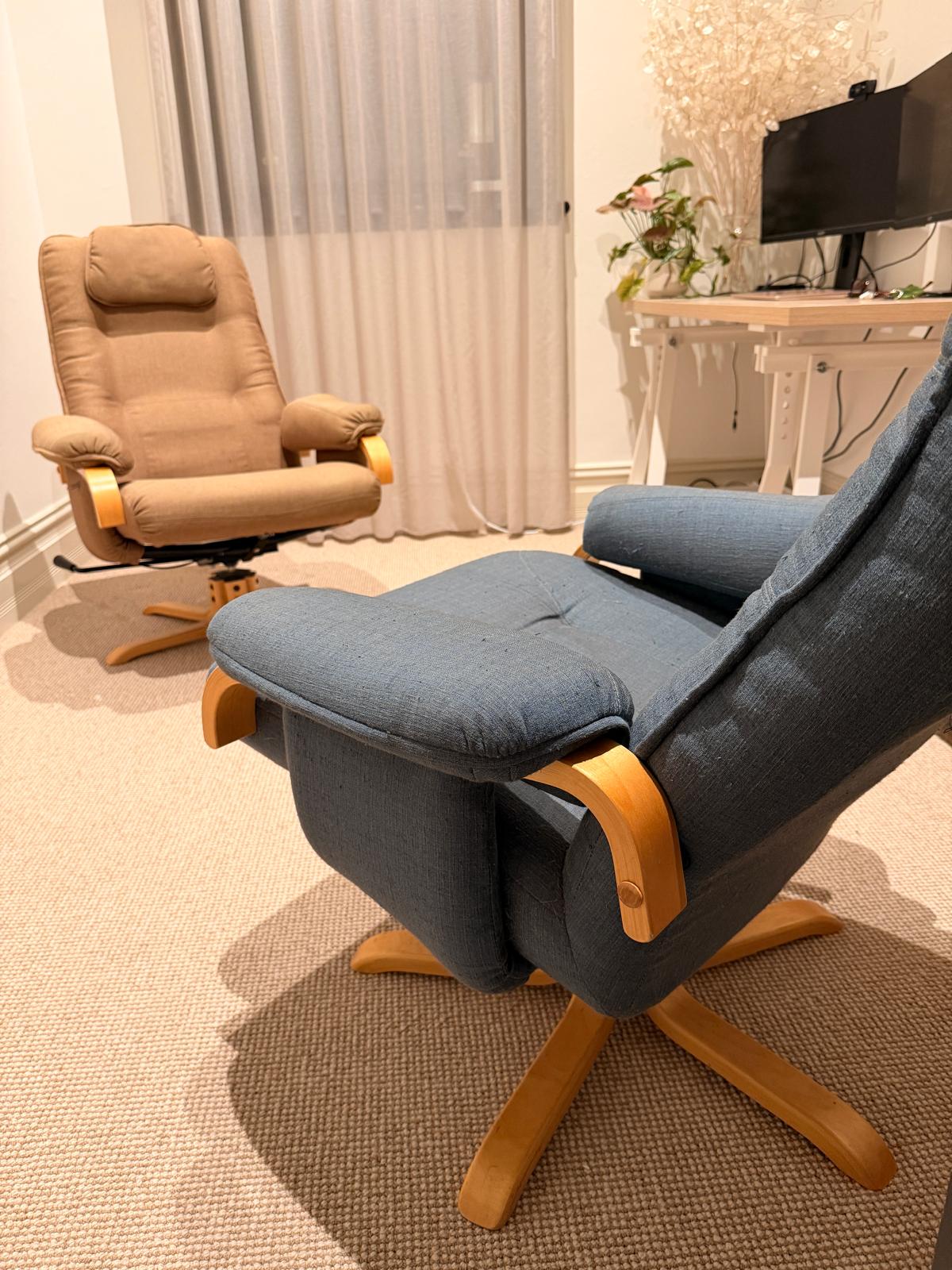
I see clients in person at The Insomnia Studio in East Fremantle, and consultations are also available online via telehealth.
So if getting to the Studio isn’t practical, we can still work together from wherever you are.
A fresh approach
Cognitive Behavioural Therapy (CBT-I) for Insomnia is the foundation of the way I work. I’ve used it for many years with clients and drawn on it in my own life, and it remains the international first-line treatment for insomnia, and for good reason. It helps change the behaviours and thinking patterns that keep insomnia going.
But I’ve also seen that when insomnia has become deeply established, CBT-I may be only part of what's needed.
Over time, the mind and body can learn to stay alert around sleep, even when you feel tired and ready for bed.
Created with